
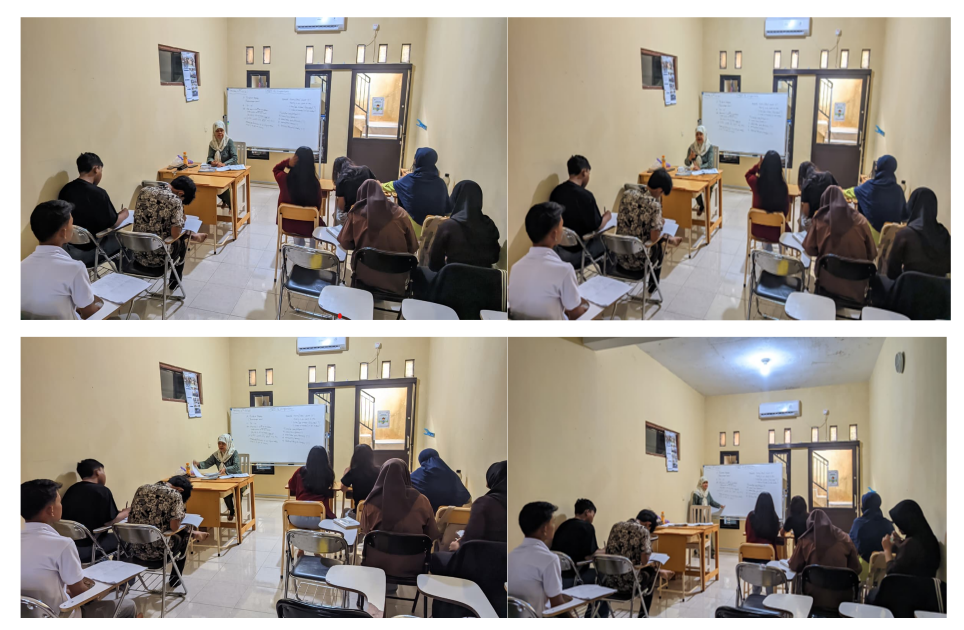
English has now become one of the most important global skills to master. At PKBM Griya Cendekia, the learning process is designed to be not only theoretical but also contextual and practical for the daily lives of our learners. One of the essential topics learned is Degrees of Comparison.
This article will thoroughly explore what Degrees of Comparison are, covering their meaning, purpose, practical examples, and benefits for PKBM Griya Cendekia students.
Meaning and Purpose of Degrees of Comparison
Simply put, a Degree of Comparison is a form of change in adjectives or adverbs in English used to compare a thing, person, place, or situation with another.
In English grammar, Degrees of Comparison are divided into three main forms:
- Positive Degree (Equal Level)
- Meaning: States that two things are at the same level, equal, or comparable.
- Pattern: as + adjective/adverb + as
- Example: “Ali is as tall as Budi.”
- Comparative Degree (Higher Level)
- Meaning: States that something has a superior or lower quality compared to one other thing. It is usually followed by the word than.
- Pattern: adjective + -er + than (for one/two-syllable words) or more + adjective + than (for words with more than two syllables).
- Example: “This mountain is higher than that hill.”
- Superlative Degree (Highest Level)
- Meaning: States that something has the highest quality among three or more things. It is usually preceded by the word the.
- Pattern: the + adjective + -est or the most + adjective.
- Example: “She is the smartest student in the class.”
Learning Purpose
The main purpose of learning this topic is to enable students to convey information accurately when evaluating, weighing, or describing differences in characteristics between objects in English conversation and writing.
Practical Examples in Daily Life
The application of Degrees of Comparison is very close to our everyday activities, whether shopping, working, or socializing:
- When Shopping:
- “Is this smartphone cheaper than that one?” — Using the Comparative Degree to compare prices.
- When Describing Objects or Performance:
- “Our local coffee is as good as imported coffee.” — Using the Positive Degree.
- When Making Decisions:
- “This is the best choice for our community center.” — Using the Superlative Degree.
Benefits of Knowing Degrees of Comparison for PKBM Students
As learners at PKBM Griya Cendekia—most of whom have diverse and dynamic backgrounds—mastering this material provides many real advantages:
- Improving Effective Communication: Students can express opinions, quality comparisons, or preferences more precisely and politely in English.
- Broadening Global Horizons: A good understanding of sentence structures helps students comprehend literature, social media, and digital information in English.
- Supporting Career and Entrepreneurship: In the digital era, the ability to accurately describe products, business advantages, or item specifications is highly needed, especially for students engaged in independent business.
- Building Self-Confidence: Mastering basic grammar like comparisons eliminates the fear of making mistakes when speaking or writing in English.
Conclusion: Learning English is Fun and Meaningful!
“English is not a high wall that is hard to climb, but a wide bridge that connects us to the outside world. At PKBM Griya Cendekia, learning a foreign language is designed to be relaxed, practical, and relevant to real life. Let’s throw away all our insecurities! Together, let’s improve ourselves, reduce our doubts, and become the superlative (most amazing) version of ourselves. A bright future is right in the palm of our hands!”